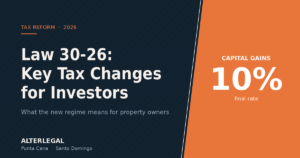
When acquiring real estate in the Dominican Republic, buyers are generally subject to a 3% property transfer tax, calculated based on the higher of (i) the value assessed by the Dominican Tax Authority (DGII) or (ii) the declared purchase price stated in the deed of sale. This tax is typically payable as a condition for the registration of the transfer and the issuance of the new Title Certificate in the buyer’s name.
In addition to the transfer tax, property owners may also be subject to the annual property tax (Impuesto al Patrimonio Inmobiliario – IPI), which applies to properties whose cumulative value exceeds the legally established threshold, unless an exemption applies.
However, properties covered under the CONFOTUR tourism incentive regime benefit from significant and highly valuable tax exemptions. These incentives are granted by the Dominican government to qualifying tourism and hospitality projects and generally include:
• Exemption from the 3% property transfer tax
• Exemption from the annual property tax (IPI)
• Additional fiscal benefits related to construction materials, financing, and operational taxes, depending on the nature of the project
These exemptions typically apply for a period of up to 15 years, starting from the issuance date of the CONFOTUR resolution.
That said, the critical legal issue is that CONFOTUR benefits are never presumed. They must be formally and legally verified as part of the due diligence process. While many developments market themselves as “CONFOTUR projects,” the exemption only applies if:
1. The specific project was granted a valid CONFOTUR resolution;
2. The specific unit being acquired is expressly covered by that resolution; and
3. The benefit period has not expired at the time of transfer.
Failure to properly verify these elements may result in unexpected tax liabilities, including the full 3% transfer tax and future IPI obligations, despite marketing representations to the contrary.
At AlterLegal, verification of CONFOTUR eligibility and validity is a standard component of our tax and legal due diligence. We confirm the applicable resolution, scope of coverage, remaining benefit period, and proper registration before advising clients to rely on any tax exemption.
Not sure whether your property qualifies for CONFOTUR? Our real estate attorneys in Punta Cana verify exemption status and calculate your exact tax exposure before you sign anything. Talk to us first.