
Dominican Republic Residency: Investor, Rentier & Pensioner Guide

How to Obtain Residency in the Dominican Republic: Investor, Rentier and Pensioner Options The Dominican Republic has become an increasingly attractive destination for foreign investors, retirees, entrepreneurs, and individuals looking to establish a second home in the Caribbean. For foreigners planning to live in the country on a long-term basis, obtaining legal residency can provide […]
Law 30-26: Key Tax Changes for Real Estate Investors in the Dominican Republic
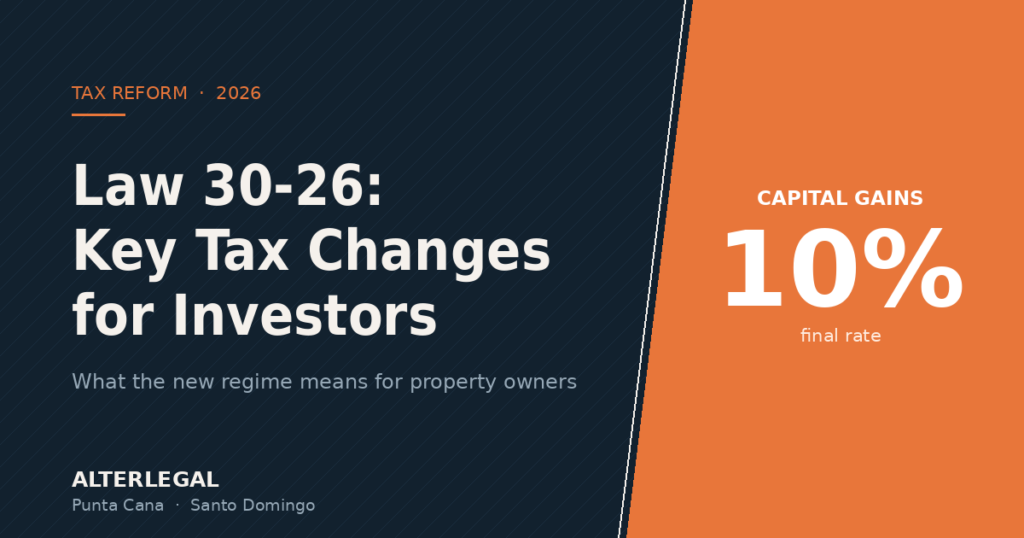
The enactment of Law No. 30-26 on 18 June 2026 marks one of the most significant tax reforms in the Dominican Republic in recent years. The legislation amends the Tax Code (Law 11-92), touching more than 20 laws and over 40 tax provisions, and introduces important changes affecting individuals, companies, real estate investors, and foreign […]
Are There Any Hidden Costs When Buying Property in the Dominican Republic?
The Dominican real estate system is transparent when properly navigated, but foreign buyers sometimes encounter unexpected costs after closing. These expenses are rarely truly “hidden”; rather, they are costs that were not properly disclosed, verified, or explained before the transaction was completed. Common post-closing surprises include unpaid condominium fees, outstanding municipal taxes, unpaid property taxes, […]
CONFOTUR in Punta Cana: Tax Exemptions Every Buyer Should Claim

Walk through any sales office in Cap Cana, Bávaro, or Downtown Punta Cana and you will see CONFOTUR referenced in nearly every brochure. For foreign buyers, understanding what CONFOTUR actually provides, and how to claim it, can translate into tens of thousands of dollars in savings. CONFOTUR stands for the Consejo de Fomento Turístico, the […]
Buying an Apartment in Punta Cana: A Legal Roadmap for Foreign Buyers
Punta Cana is the single most active real estate market in the Dominican Republic, and the vast majority of transactions involve foreign buyers. Whether you are looking at Cap Cana, Punta Cana Resort, Bávaro, Downtown Punta Cana, Uvero Alto, or Punta Cana Village, the legal process is the same, but the market-specific details can trip […]
What Taxes Apply When Buying Property With and Without CONFOTUR?

When acquiring real estate in the Dominican Republic, buyers are generally subject to a 3% property transfer tax, calculated based on the higher of (i) the value assessed by the Dominican Tax Authority (DGII) or (ii) the declared purchase price stated in the deed of sale. This tax is typically payable as a condition for […]
Can Foreigners Open a Bank Account in the Dominican Republic?

Foreign nationals are legally permitted to open bank accounts in the Dominican Republic, but the process is subject to strict compliance requirements. Dominican banks are highly regulated and apply robust know-your-customer (KYC) and anti-money laundering standards. Opening a bank account typically requires documentation evidencing identity, legal status, source of funds, and economic ties to the […]
Can I Rent My Property Short-Term (Airbnb) in the Dominican Republic?
Short-term rentals are an integral part of the Dominican Republic’s tourism-driven real estate market, and many foreign buyers acquire property with the intention of generating income through platforms such as Airbnb. In general terms, short-term rentals are legally permitted, but their permissibility is not universal and must be evaluated on a case-by-case basis. National law […]
What Are the Ongoing Obligations If I Own Property Through a Company?

Owning real estate through a corporate vehicle in the Dominican Republic is a common and often strategic decision for foreign buyers. Corporate ownership can provide advantages in terms of succession planning, asset protection, and, in some cases, tax efficiency. However, these benefits come with ongoing legal, accounting, and tax obligations that must be clearly understood […]
Can I Use a U.S. or Canadian LLC to Buy Property in the Dominican Republic?

Foreign companies, including U.S. and Canadian LLCs, are legally permitted to own real estate in the Dominican Republic. However, the decision to use a foreign entity should never be made lightly or for convenience alone. While ownership through a foreign LLC may seem attractive from a familiarity or estate-planning perspective, it often introduces additional complexity. […]